
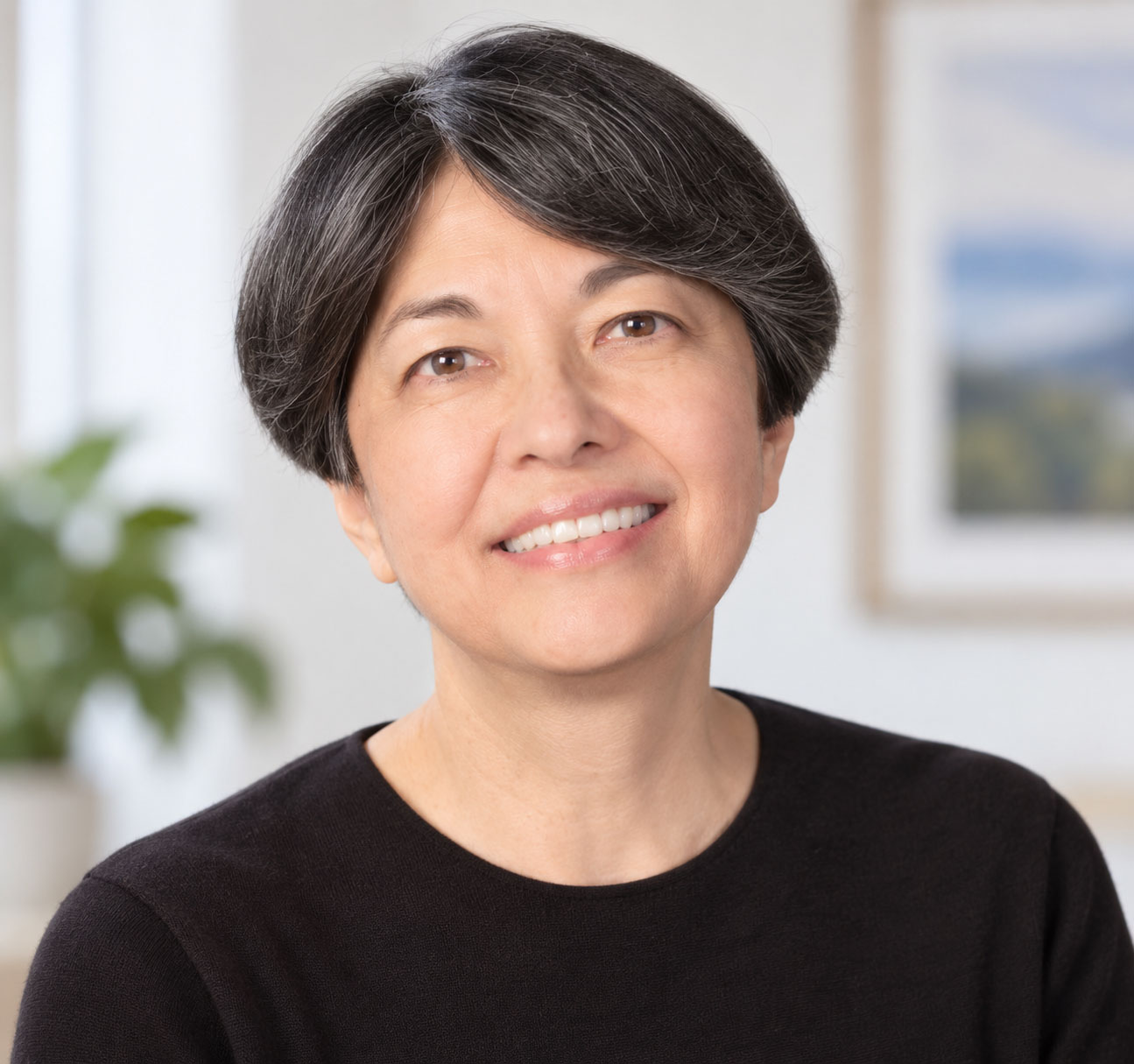
Dr. Caroline Sakai
Pioneer in Thought Field Therapy
Introduction
Dr. Caroline Sakai is a clinical psychologist, researcher, author, and longtime practitioner and trainer of Thought Field Therapy (TFT). An early clinician to work directly with TFT founder Dr. Roger Callahan, Sakai has spent decades bringing the methodology into clinical practice, professional training, research, and humanitarian trauma-relief work.
Her story is closely connected with the development of Thought Field Therapy itself.
Sakai came to TFT as an experienced psychologist with decades of clinical practice already behind her. Rather than approaching TFT simply as a tapping technique, she became deeply involved with Callahan’s broader methodology and its application to complex emotional and psychological problems.
That work has taken her from behavioral health programs at Kaiser to professional TFT training, published clinical research, work with survivors of the Rwandan genocide, disaster-relief missions, and decades of teaching other professionals how to use Thought Field Therapy.
A Career in Clinical Psychology
Dr. Sakai began working as a clinical therapist in 1966, long before she encountered Thought Field Therapy.
She earned master’s degrees in Social Work and Psychology and later completed her Ph.D. in Clinical Psychology. Her professional background included an extensive career with Kaiser Behavioral Health Services, where she served as Chief Psychologist.
During her years at Kaiser, Sakai developed an intensive outpatient program and clinical group programs addressing anxiety, depression, children and adolescents, couples, and other behavioral health needs. She also helped establish Behavioral Medicine Services within Kaiser’s primary-care clinics.
Her clinical interests extended beyond any single therapeutic model. She trained in and worked with a variety of approaches, including serving as an EMDR consultant and facilitator.
Throughout her career, however, one question continued to guide her work: How can people be helped effectively while also being given practical tools they can use themselves?
Meeting Roger Callahan and Discovering Thought Field Therapy
While working at Kaiser Behavioral Health Services, Sakai was introduced to clinical psychologist Dr. Roger Callahan and the methodology he had developed known as Thought Field Therapy.
Callahan had been developing TFT since around 1980. His approach combined focused attention on an emotional or psychological problem with tapping specific points on the body in prescribed sequences.
But Sakai discovered that TFT was more than the tapping procedure itself.
Callahan had developed a broader methodology that included problem-specific algorithms, assessment of treatment response, corrective procedures, and advanced diagnostic methods for determining individualized tapping sequences.
Sakai became one of the early clinicians to work directly with Callahan and continued studying and applying his methodology.
That relationship would shape the next several decades of her professional life.
Bringing Thought Field Therapy Into Clinical Practice
Sakai did not leave her clinical background behind when she began working with TFT. She brought TFT into that background.
Along with other health professionals at Kaiser Behavioral Medicine and Behavioral Health Services in Honolulu, Sakai began examining the application of TFT with patients experiencing a wide variety of concerns.
That work ultimately produced one of the important early clinical reports on Thought Field Therapy.
In 2001, Sakai was lead author of “Thought Field Therapy Clinical Applications: Utilization in an HMO in Behavioral Medicine and Behavioral Health Services,” published in the Journal of Clinical Psychology.
The study reported on 1,594 applications of TFT involving 714 patients and a wide range of presenting concerns, including anxiety, anger, acute stress, bereavement, chronic pain, cravings, depression, panic, phobias, post-traumatic stress, relationship stress, and work stress.
The uncontrolled study found statistically significant pre- to post-session decreases in self-reported distress across the categories reviewed. The authors appropriately described the findings as preliminary and called for controlled studies examining validity, reliability, and whether effects were maintained over time.
For Sakai, the work represented something equally important: the opportunity to explore TFT beyond the work of its founder and within an established behavioral health environment.
Working Directly With the Original TFT Methodology
As tapping became more widely known, particularly through Emotional Freedom Techniques (EFT) and other approaches that followed TFT, Sakai continued working with Callahan’s broader methodology.
Thought Field Therapy includes the fundamental process many people now recognize as tapping: focusing attention on a particular problem while stimulating specific points on the body.
But TFT does not end there.
TFT contains additional layers of methodology for determining what to do, in what sequence, and what to investigate when the initial intervention doesn’t resolve the problem.
At the Algorithm level, TFT teaches established sequences for particular categories of problems. At the more advanced Diagnostic level, practitioners learn Causal Diagnosis and methods intended to identify individualized treatment sequences.
This broader methodology became central to Sakai’s clinical work and, eventually, to the professional TFT courses she teaches today.
Thought Field Therapy and Trauma
One area in which Sakai became particularly involved was the application of TFT following severe trauma.
Her work eventually took her well beyond the clinical office.
She led and participated in volunteer clinical teams using TFT with people affected by disasters, violence, war, and other traumatic experiences. Her trauma-relief work has included missions following Hurricane Katrina as well as extensive work in Rwanda with survivors of the 1994 genocide.
The Rwanda work became particularly significant.
Working With Survivors of the Rwandan Genocide
Dr. Sakai traveled to Rwanda as part of trauma-relief efforts working with genocide survivors and helping train local community members in Thought Field Therapy.
One published study involving Sakai examined TFT with 50 orphaned adolescents who continued to experience symptoms associated with post-traumatic stress approximately 12 years after the genocide.
Following the intervention, researchers reported substantial reductions in PTSD checklist scores. The project also explored an important characteristic of TFT: once learned, some of its techniques can be self-administered or used within a community rather than requiring continued access to the original visiting clinicians.
Sakai subsequently co-authored a randomized waitlist-controlled study involving 145 adult Rwandan genocide survivors. That study reported statistically significant reductions across most of the trauma measures examined, with reductions maintained at a two-year follow-up.
As with research into TFT more broadly, these findings should be considered within the context of the study designs, populations, subsequent research, and continuing scientific investigation.
For Sakai, however, Rwanda became much more than a research project. It became part of a long-term commitment to exploring how practical psychological tools could be taught within communities that had experienced extraordinary trauma.
From Treating Trauma to Teaching Communities
Sakai’s humanitarian work reflects an important principle that has run throughout her career: people can benefit from learning tools they can use themselves.
Rather than limiting trauma-relief work to treatment delivered by visiting clinicians, TFT projects also trained local community leaders and others who could continue using the techniques after the clinical teams departed.
This combination of treatment, education, and community empowerment became an important element of Sakai’s work.
It also reflects one of the characteristics that originally attracted her to Thought Field Therapy—the ability to teach people practical procedures they may be able to use outside the therapy office.
Author of Overcoming Adversity
Sakai brought many of these experiences together in her 2014 book, Overcoming Adversity: How Energy Tapping Transforms Your Life’s Worst Experiences — A Primer for Post-Traumatic Growth.
The book draws upon case examples and Sakai’s experiences with Thought Field Therapy to explore not only recovery following difficult experiences, but the possibility of resilience and post-traumatic growth.
It reflects an important evolution in her work: moving beyond the immediate reduction of emotional distress toward the larger question of how people rebuild their lives following adversity.
A Researcher, Clinician and Teacher
Over the course of her career, Sakai has occupied several roles within the development of Thought Field Therapy.
- Clinician — applying TFT with clients across decades of psychological practice.
- Researcher — participating in published studies examining clinical and trauma-related applications of TFT.
- Humanitarian — bringing TFT to communities affected by genocide, disaster, and severe trauma.
- Trainer — teaching health professionals and others how to apply TFT.
- Author — documenting the use of tapping, adversity, resilience, and post-traumatic growth.
- Student and colleague of Roger Callahan — helping carry forward the original methodology developed by TFT’s founder.
These experiences give Sakai an unusual perspective on the history and continuing development of tapping therapies.
Carrying Forward Roger Callahan’s Work
The modern tapping landscape looks very different from the one Sakai encountered when she first began working with Roger Callahan.
Today, millions of people have encountered tapping through EFT, online videos, books, therapists, coaches, and other mind-body approaches.
Many may not realize that the tapping process they recognize has roots in the earlier development of Thought Field Therapy.
Sakai represents a direct connection to that history.
While other tapping approaches evolved from elements of TFT, she continued studying, practicing, researching, and teaching Callahan’s broader methodology—including its established Algorithms and advanced Diagnostic procedures.
Her work connects the origins of modern tapping with the continuing practice of the original Thought Field Therapy methodology.
Teaching the Next Generation of TFT Practitioners
Dr. Sakai has been practicing Thought Field Therapy and conducting professional TFT courses since 1998.
Today, through TFT Center, she continues to teach both foundational and advanced Thought Field Therapy.
TFT Algorithm Training introduces established tapping sequences and practical procedures that can be learned and used for a range of common emotional and performance-related concerns.
TFT Diagnostic Training takes practitioners further into Callahan’s original methodology, including Causal Diagnosis and procedures for working with difficult, complex, chronic, or recurring problems.
For students, that means learning TFT from someone whose experience reaches back to direct work with its founder and extends through decades of clinical practice, research, humanitarian work, and teaching.
Dr. Caroline Sakai and TFT Center
TFT Center represents the continuation of that work.
Its purpose is not simply to preserve the history of Thought Field Therapy, but to keep the methodology alive, understandable, teachable, and useful for a new generation.
Roger Callahan developed Thought Field Therapy.
Dr. Caroline Sakai became one of the clinicians who helped take that methodology beyond its origin—into clinical practice, research, trauma relief, community education, and professional training.
Today, she continues that work by teaching others not only how to tap, but how to understand and apply the broader Thought Field Therapy methodology behind modern tapping.