
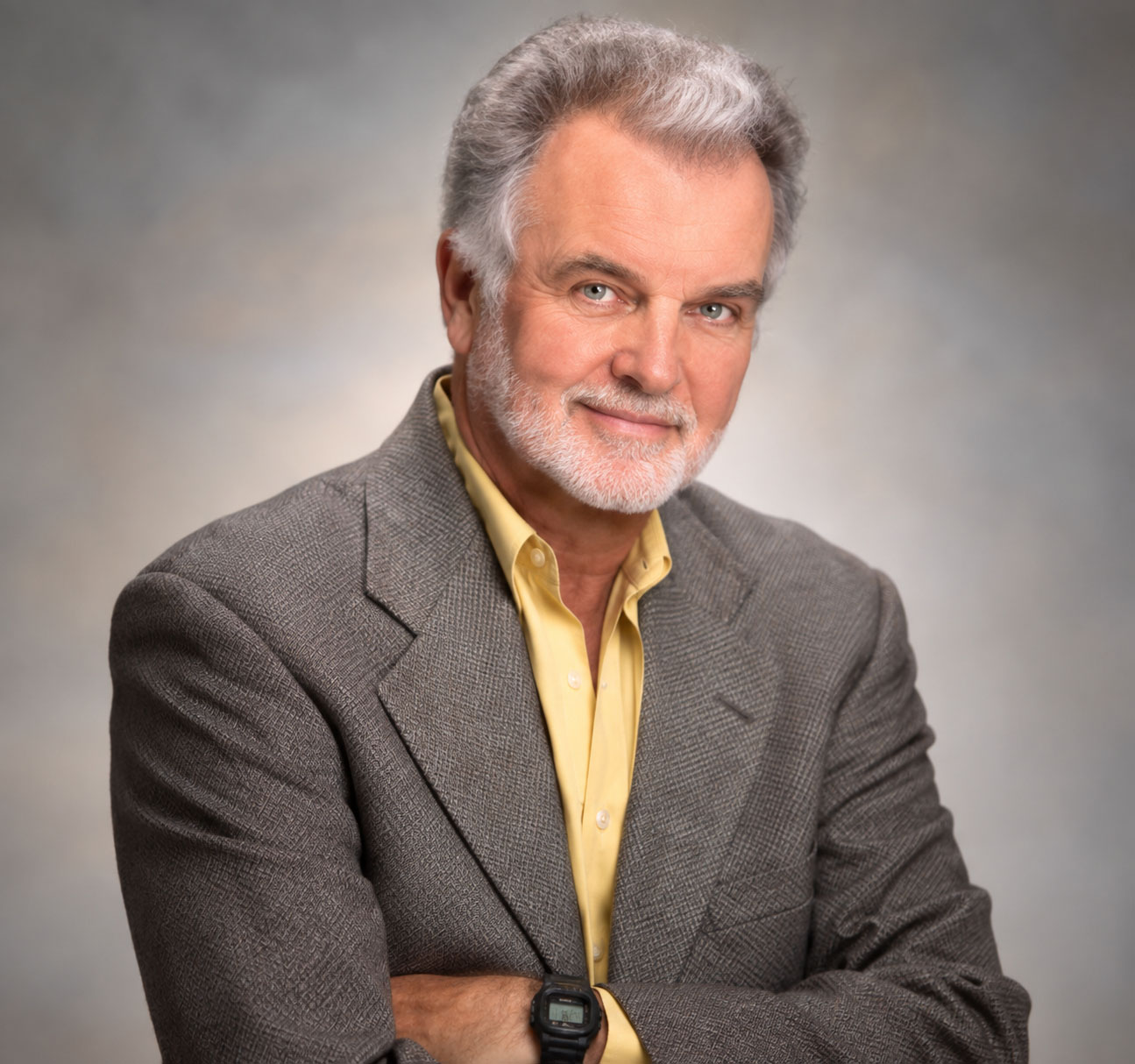
Dr. Roger Callahan
Founder of Thought Field Therapy
Introduction
Dr. Roger J. Callahan was an American psychologist and the founder of Thought Field Therapy (TFT), the pioneering tapping methodology that helped establish the foundation for EFT and many of the tapping approaches practiced today.
Beginning with an unexpected clinical observation around 1980, Callahan spent decades exploring the relationship between focused thought, emotional and physical responses, and the stimulation of specific points on the body.
What began as an unusual discovery with a single patient eventually developed into a much broader system of tapping sequences, problem-specific algorithms, assessment procedures, and advanced methods for determining individualized treatment sequences.
Callahan called this system Thought Field Therapy.
Roger Callahan’s Background in Psychology
Roger J. Callahan, Ph.D., was a clinical psychologist who spent much of his professional life looking for more effective ways of helping people experiencing emotional and psychological distress.
His work initially developed within the established psychological approaches of his time. Over the course of his career, however, Callahan became increasingly interested in ideas outside conventional psychotherapy, including acupuncture and the traditional Chinese meridian system, Applied Kinesiology, and the relationship between physical sensations and emotional responses.
That curiosity eventually led him in a very different direction.
Rather than working exclusively through conversation, interpretation, exposure, or changes in thought and behavior, Callahan began investigating whether stimulating particular points on the body while a person focused on a problem could influence the emotional and physical response associated with it.
This exploration would eventually become Thought Field Therapy.
The Discovery That Led to Thought Field Therapy
The story of TFT is closely connected with a patient Callahan identified as Mary.
Around 1980, Callahan had been working with Mary on an intense and longstanding fear of water. Accounts of the case describe a fear severe enough to interfere with everyday activities involving water.
Callahan had reportedly worked with Mary for more than a year using conventional psychological approaches, with limited improvement.
One feature of Mary’s response particularly interested him: when she thought about water, she experienced a powerful physical sensation in her stomach.
Callahan had been studying ideas related to acupuncture and the traditional Chinese meridian system. In that system, a point beneath the eye is associated with the stomach meridian.
He asked Mary to tap beneath her eye while she focused on her fear of water.
According to Callahan’s account, Mary’s stomach discomfort quickly subsided and her fear response changed dramatically. She was subsequently able to approach the swimming pool that had previously caused considerable distress.
Callahan did not initially have a complete explanation for what had happened.
Instead, the experience gave him a question:
Could stimulating specific points on the body while a person focused on an emotional problem change the response connected with that problem?
That question became the starting point for years of observation and experimentation.
From One Tapping Point to a Methodology
Callahan soon discovered that tapping the same point did not produce the same response for every person or every problem.
That observation became important to the development of TFT.
Rather than concluding that there was one universal tapping point or sequence, Callahan began experimenting with different points and combinations of points.
Over time, he developed ordered tapping sequences associated with different types of emotional problems.
His work eventually included tapping points associated with the face, upper body, hands, and fingers, along with additional procedures intended to address situations in which an initial sequence did not produce the expected change.
The result was not simply a collection of tapping points.
It became a methodology for determining what to tap, in what sequence, and what to investigate when the initial intervention did not resolve the problem.
Why Callahan Called It “Thought Field Therapy”
Callahan used the term thought field to describe the information he believed became active when a person focused on a particular problem, memory, fear, emotion, or experience.
Thinking about an upsetting experience can produce very real emotional and physical responses. A memory may be accompanied by fear, tightness in the chest, nausea, anger, sadness, increased heart rate, muscle tension, or other sensations.
Callahan described this process as “tuning into” a thought field.
Within his theoretical model, disturbances associated with the thought field were connected with emotional distress. TFT was developed as a way of addressing those disturbances while the person remained focused on the specific issue.
Callahan’s original explanations incorporated concepts from the traditional meridian system and other theories he explored during the development of TFT. The mechanisms responsible for results reported with TFT and related tapping methods remain a subject of research and scientific debate.
The practical structure Callahan developed, however, was straightforward: focus on a specific problem, stimulate specific points in an ordered sequence, observe the response, and determine what to do next.
The Development of TFT Algorithms
As Callahan’s work progressed, he identified tapping sequences that he found could be applied to common categories of problems.
These became known as TFT Algorithms.
An algorithm is a predetermined sequence of tapping points associated with a particular type of problem. Algorithms made TFT considerably easier to teach and use because someone did not need to master Callahan’s advanced diagnostic methods before learning practical TFT techniques.
This became the foundation of Algorithm-level TFT training.
But algorithms represented only one part of Callahan’s system.
Causal Diagnosis: Going Beyond Standard Sequences
Callahan continued developing methods for situations in which an established algorithm was not sufficient.
This work became known within TFT as Causal Diagnosis.
At this more advanced level, the goal is not simply to select a predetermined algorithm. Diagnostic procedures are used to identify an individualized sequence for the particular problem being addressed.
This distinction remains fundamental to understanding Thought Field Therapy.
TFT is not only the act of tapping. It also includes a methodology for determining how tapping should be applied.
That broader system includes established algorithms, individualized sequences, evaluation of the person’s response, and additional procedures for investigating what may be interfering with progress.
Before EFT, There Was Thought Field Therapy
Callahan’s work also occupies an important place in the larger history of modern tapping.
In the 1990s, Gary Craig studied Thought Field Therapy with Roger Callahan before developing Emotional Freedom Techniques (EFT).
EFT retained the fundamental practice of focusing on a problem while tapping points on the body, while moving toward a more standardized tapping approach.
EFT would eventually help introduce tapping to a much wider audience.
As a result, many people today discover tapping through EFT without realizing that the practice has an earlier history in Callahan’s Thought Field Therapy.
Before EFT became widely known, Callahan had already spent years developing TFT’s tapping sequences, algorithms, diagnostic procedures, and broader treatment methodology.
TFT, EFT and the Growth of Modern Tapping
TFT and EFT should not be understood as completely unrelated techniques that happened to discover tapping independently.
They share a historical lineage.
Both involve focusing attention on an issue while stimulating specific points on the body. But TFT retained additional layers of methodology for determining what to do, in what sequence, and what to investigate when the initial intervention does not produce the expected response.
This is one reason understanding Callahan’s work remains relevant even as EFT and other tapping methods have become more familiar.
If you already know EFT or another tapping approach, you already know part of the story.
Thought Field Therapy provides an opportunity to explore where modern tapping came from and the broader methodology that developed around it.
Roger Callahan and Caroline Sakai
Callahan’s legacy also lives through the clinicians who worked directly with him and helped bring TFT into professional practice.
Among these practitioners is Dr. Caroline Sakai. Sakai was already an experienced clinical psychologist when she encountered Callahan and Thought Field Therapy. Her background included decades of clinical practice and leadership in behavioral health services.
She became an early practitioner of TFT and worked closely with Callahan while applying the methodology in clinical settings.
Sakai subsequently helped take TFT into areas that would become important parts of its continuing development: clinical application, research, professional training, and humanitarian trauma relief.
In 2001, Sakai was lead author of “Thought Field Therapy Clinical Applications: Utilization in an HMO in Behavioral Medicine and Behavioral Health Services,” published in the Journal of Clinical Psychology. The paper described the use of TFT with more than 700 patients in behavioral medicine and behavioral health settings.
Her later work included TFT research and trauma-relief projects involving survivors of the Rwandan genocide and other populations affected by severe trauma.
That direct connection between Callahan’s original development of TFT and Sakai’s decades of clinical application, research, and teaching is central to the work of TFT Center today.
Callahan’s Work Continues
Roger Callahan continued developing Thought Field Therapy over several decades.
His work produced not only the tapping procedure for which TFT is best known, but a larger framework that included algorithms, Causal Diagnosis, procedures for addressing barriers to improvement, the 9 Gamut sequence, Collarbone Breathing, advanced diagnostic methods, and other techniques.
Some of these concepts subsequently influenced EFT and the wider family of tapping approaches. Other parts of the methodology remained primarily associated with TFT.
Research into TFT, EFT, acupoint tapping, and related mind-body approaches has continued, while questions about mechanisms, specific components, efficacy, and appropriate applications remain areas of ongoing scientific investigation.
Callahan’s historical influence, however, can be seen in something much easier to recognize:
Millions of people today are familiar with the idea of focusing on emotional distress while tapping points on the body.
That modern tapping story has important roots in Roger Callahan’s work.
Preserving the Original TFT Methodology
At TFT Center, preserving that history means more than remembering where tapping began.
It means continuing to teach the broader methodology.
Through TFT Algorithm Training, students can learn established tapping sequences and foundational TFT procedures.
Through advanced TFT Diagnostic Training, practitioners can go beyond predetermined sequences and learn the diagnostic methodology used to develop individualized approaches for more complex, difficult, or recurring problems.
Dr. Caroline Sakai brings a particularly important connection to this training because her experience reaches directly back to her work with Dr. Callahan and continues through decades of clinical practice, research, humanitarian work, and teaching.
Roger Callahan developed Thought Field Therapy. Caroline Sakai became one of the early clinicians who helped carry that work into practice, research, and training. TFT Center continues that lineage today.